
News
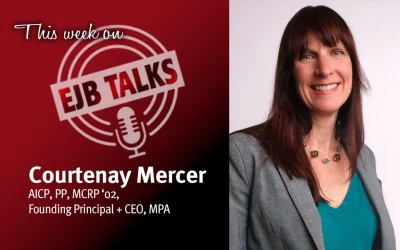
A Career Across Sectors: Building Communities Through Policy and Planning
Dean Stuart Shapiro talks with alumna and Advisory Board member Courtenay Mercer, AICP, PP, MCRP ‘02, about her path from political science to planning, and a career across government, nonprofits, and consulting.

New Jersey Clinics Can Now Treat Mind and Body Under One Roof, One License
Patients at community health centers in Newark and central New Jersey can now get mental health counseling and a physical checkup in the same visit, at the same address, thanks to a regulatory overhaul that took effect in April 2026. The change collapses what used to...
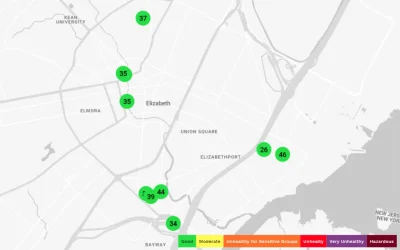
BREATHE Online Portal Launches in Elizabeth After Indoor Air Quality Study
“We discovered that understanding indoor environments is just as critical as monitoring the outdoors. Fortunately, both the city and its residents can take action. Indoors, residents can improve air quality by choosing not to smoke. Outdoors, planting trees expands shade, while the city can enforce landlord-tenant laws to ensure apartments remain safe and livable even during the hottest summer days,” said Clint Andrews

Talking Across Difference Aims to Build Civil Dialogue Despite a Divisive Political Climate
“Political discussion has always been seen as a best practice of civic education,” Matto said. “There’s plenty of solid research that demonstrates that campuses that have a culture in which students are often given opportunities or find themselves in political discussions … can be an enriching learning experience.”
U. associate professor co-authors report on implications of causal evidence in education
“I think that establishing a cause and effect relationship is really fundamental to understanding and recommending the right and best course of action regarding the establishment and refinement of public and nonprofit programs,” Peck said.

Daily Targum: U. Professor receives grant to study sickle cell disease, emergency room care
“The study is all around implementation and implementation science,” Rushing said. “How do we improve the way these tools that we know are supposed to be beneficial … how do we improve the way they’re being implemented within a system?”

Court ruling could determine fate of $1.7B E-ZPass contract in NJ
Marc Pfeiffer, associate director of Rutgers University’s Center for Urban Policy Research, said the Turnpike Authority has to manage the balancing act of being transparent while not giving so much away that it is opened up to relentless litigation and bid protests that can delay projects to repair aging bridges and highways and advance complicated technology services, such as E-ZPass.
Joseph Cuomo Receives 2026–27 Stormwater Infrastructure Matters Coalition Fellowship
Second year MCRP candidate Joseph Cuomo is the recipient of a 2026–27 Stormwater Infrastructure Matters (SWIM) Coalition Fellowship. The SWIM Coalition brings together more than 70 community-based, regional, and national organizations, universities, businesses, and...

NJ Grocers Face Affordability Squeeze As Closures Mount
“The magnitude of the July dip (and the downward revisions for June) is somewhat striking,” said Will Irving, a professor at the New Jersey State Policy Lab at Rutgers University in New Brunswick.

NJSPL: New Jersey Planning Perspectives for New Nuclear Generation
Gov. Mikie Sherrill’s Nuclear Policy Task Force identified public trust and confidence as one of its five primary areas of focus, recognizing that successful nuclear development requires more than technical and economic considerations. As the next generation of nuclear reactors is slated for deployment likely within the next decade, long-term plans will require assessing and addressing community needs and concerns.
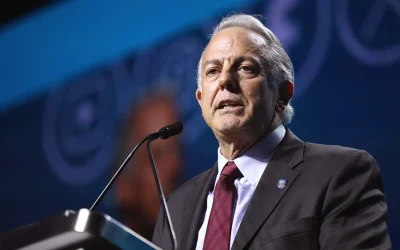
Lombardo says he cut 900 regulations. Did it actually make a difference for Nevada?
But nuance is often lost during that discourse, Shapiro said. For example, Lombardo has at times said he has “cut” 900 regulations, but that is not accurate because hundreds of the changes were adjusting existing regulations.

Dr. Bhuyan and Singer (DHA ’27): Fixing Medicaid Rates is a Start | Opinion
Soumitra Bhuyan, Executive Director of Health Administration Programs and Associate Professor and Moishe B. Singer, DHA candidate, discuss what Trenton can do to address Medicaid gaps.